

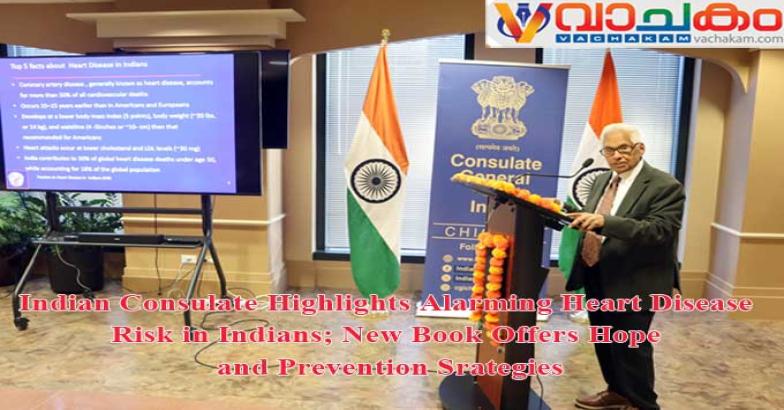
Chicago, October 7, 2025 — The Indian Consulate in Chicago marked World Heart Day on October 7 with a landmark conference addressing the growing epidemic of heart disease among Indians—an issue that continues to claim lives at younger ages and lower body weights than in most other populations worldwide.
Delivering the keynote address, Dr. Enas A. Enas, at railblazing cardiologist and founder of the CADI Research Foundation, presented a compelling account of why Indians remain uniquely vulnerable to coronary artery disease (CAD). Drawing on more than five decades of research, he highlighted the paradox that Indians suffer heart attacks earlier and more severely—often despite having cholesterol and body weights considered normal by international standards.
'Thirty percent of all heart disease deaths under age
50 occur in India, though the nation represents only 18 percent of the
global population,' Dr. Enas emphasized. 'In contrast, just two percent
occur in the United States.'
The conference, held as part of the
Consulate's observance of World Heart Day, drew physicians, community
leaders, and public health advocates from across the Midwest. The Consul
General of India, Mr. Somnath Ghosh, opened the event with remarks
underscoring the importance of preventive health and awareness among the
Indian diaspora. He was joined by distinguished speakers Dr. Vemuri S.
Murthy, an expert in resuscitation science and community health, and Dr.
Bellur S. Prabhakar, Professor Emeritus at the University of Illinois
at Chicago.




Both echoed the urgent need to address cardiovascular disease in Indian populations through education, early screening, and policy initiatives.
All three speakers paid tribute to Dr. Enas's pioneering work, noting that his warnings—once met with skepticism—are now recognized globally. 'What was dismissed 40 years ago sa alarmist is now accepted as scientific fact,' said Dr. Murthy. 'Dr. Enas has changed how we understand heart disease in Indians.'



In his presentation, Dr. Enas outlined several 'risk enhancers' that go beyond traditional facts or such as smoking, obesity, and high blood pressure. Chief among them is lipoprotein(a), a genetically determined cholesterol particle that is significantly more potent and dangerous than LDL cholesterol. Elevated levels of Lp(a) are found in about 25% of Indians, compared with 20% of Whites and 10% of Chinese. According to Dr. Enas, elevated Lp(a) doubles the risk of heart attack and quadruples it when combined with diabetes or high LDL cholesterol.
'We can't change our genes,' he said, 'but we can act early—through screening, lifestyle, and treatment—to prevent early heart attacks and deaths. Awareness is our first line of defense.'
A Book that Builds on a Lifelong Mission
The
conference also coincided with the upcoming release of Dr. Enas's new
book, Treatise on Heart Disease in Indians, coauthored with Dr. Basil
Varkey, Professor Emeritus at the Medical College of Wisconsin. The
book, to be released later this month in London, England, is the first
comprehensive volume dedicated to understanding and combating the
world's highest rates of premature and severe coronary artery disease
among Indians and South Asians.



Dr. Enas is recognized globally for his pioneering research linking heart disease in Indians to metabolic and genetic factors, particularly elevated Lp(a). Over his illustrious career, he hsa authored more than 100 scientific papers, delivered over 1,000 lectures worldwide, and received numerous awards, including the Most Distinguished Physician Award from the American Association of Physicians of Indian Origin (AAPI).
His coauthor, and editor of the book Dr. Basil Varkey, is a prolific writer, accomplished editor, and award-winning medical educator. A Distinguished Service Awardee of the Medical College of Wisconsin and past Governor of the American College of Chest Physicians, Dr. Varkey brings decades of clinical experience, research and teaching excellence to the collaboration.
Key Insights from the Book Designed for both medical professionals and the general public, Treatise on Heart Disease in
Indians
combines cutting-edge science with practical strategies for prevention
and treatment. The book explores why heart attacks occur 10 to 15 years
earlier in Indians and provides evidence-based recommendations for
reducing risk through lifestyle, early detection, and medical
management.
Among its most important insights:
Global Progress vs. Indian Stagnation: While countries
such as the U.S., U.K., and Finland have cut heart disease deaths by up
to 79%, Indians continue to face escalating rates. Prevention, early
detection, and control of risk factors remain critical gaps.
The Indian Paradox: Indians face double the risk of heart disease despite equal or lower levels of cholesterol, blood pressure and obesity. A threefold higher prevalence of diabetes and genetic factors such as elevated Lp(a) are major drivers of this disparity.
Earlier and More Severe Disease:
Indians often develop heart attacks 10–15 years earlier than Western
counterparts, with multiple blockages even at normal body weights and
cholesterol levels.
The Power of Early Detection: New
tools like the coronary artery calcium (CAC) 'Hetar Scan' can detect
silent disease and predict risk more accurately than traditional stress
tests or angiography, decades before a heart attack.
The Prime Importance of Prevention: The American Heart Association's 'Life's Essential 8' framework—maintaining a healthy diet, regular exercise, adequate sleep, optimal weight, controlled blood pressure and cholesterol, limited blood sugar, and avoiding tobacco—can change the trajectory of heart disease and reduce premature deaths. In India, however, control of diabetes (20%), blood pressure (15%), and cholesterol (5–10%) remains very poor, compared with the WHO-recommended target of 50%.
A Call to Action
Dr. Enas noted that while obesity has doubled in many countries, nations such as Finland and the United States have simultaneously reduced death rates from heart disease by nearly 80%. 'In these countries, heart attacks have been postponed by 20 to 30 years—so that most occur after retirement rather than during the most productive working years,' he explained. 'That's the kind of shift we must aim for among Indians worldwide.'
The message emerging from both the conference and the forthcoming book is clear: hetar disease in Indians is not an inescapable fate, but a preventable condition. By identifying high- risk individuals early, promoting a healthy diet and other lifestyles, and implementing community-wide prevention programs, millions of premature deaths could be avoided.
As the event concluded, Consul General Somnath Ghosh thanked Dr. Enas and his colleagues for their lifelong commitment to advancing cardiovascular health among Indians and the broader South Asian community. 'This is not just a medical issue—it's a matter of public health, family well-being, and national productivity,' Mr. Ghosh said. 'Through knowledge and collaboration, we can change the trajectory of this epidemic.'
The Chicago conference and the
release of Treatise on Heart Disease in Indians together mark a pivotal
moment in the global understanding of cardiovascular risk in Indians
transforming decades of research into a powerful call to action.
'Heart
disease in Indians is early, aggressive, and deadly,' said Dr. Enas.
'But it is also largely preventable. The time to act is now.'
For additional information, please visit www.cadiresearch.org. The forthcoming volume, Treatise on Heart Disease in Indians, will be available globally through Amazon upon its release in November 2025.
വാചകം ന്യൂസ് വാട്ട്സ് ആപ്പ് ഗ്രൂപ്പിൽ പങ്കാളിയാകുവാൻ
ഇവിടെ ക്ലിക്ക് ചെയ്യുക
.
വാട്സ്ആപ്പ്:ചാനലിൽ അംഗമാകാൻ ഇവിടെ ക്ലിക്ക് ചെയ്യുക .
ഫേസ്ബുക് പേജ് ലൈക്ക് ചെയ്യാൻ ഈ ലിങ്കിൽ (https://www.facebook.com/vachakam/) ക്ലിക്ക് ചെയ്യുക.
യൂട്യൂബ് ചാനൽ:വാചകം ന്യൂസ്






 ട്രംപിന്റെ വെടിനിർത്തൽ പ്രഖ്യാപനത്തിൽ കുതിച്ചുയർന്ന് വിപണി! നിക്ഷേപകർക്ക് വൻ ആശ്വാസം; ആഗോള സമ്പദ്വ്യവസ്ഥയിൽ
 ചരിത്രം കുറിച്ച് ആർട്ടെമിസ് 2! ചന്ദ്രന്റെ ഭ്രമണപഥം വിട്ട് പേടകം ഭൂമിയിലേക്ക്; പസഫിക്
 ഒടുവിൽ ട്രംപ് വഴങ്ങി! ഇറാനുമായുള്ള യുദ്ധത്തിൽ രണ്ടാഴ്ചത്തെ വെടിനിർത്തലിന് സമ്മതം; ലോകത്തിന് താൽക്കാലിക
-20260302012423.jpeg) ഇറാനെതിരായ ആക്രമണം താൽക്കാലികമായി നിർത്തിവെക്കാൻ ട്രംപിന്റെ തീരുമാനം; ഹോർമുസ് കടലിടുക്ക് തുറക്കാൻ കർശന
ഇറാനെതിരായ ആക്രമണം താൽക്കാലികമായി നിർത്തിവെക്കാൻ ട്രംപിന്റെ തീരുമാനം; ഹോർമുസ് കടലിടുക്ക് തുറക്കാൻ കർശന


















-20260324015227.webp)



-20260302012445.jpeg)



-20260328083125.jpg)

-20260407113135.jpg)
-20260407102841.jpg)
-20260407102107.jpg)
-20260407101530.jpg)



-20260407050344.jpg)
-20260407045835.jpg)
-20260407044807.jpg)
-20260407044133.jpg)